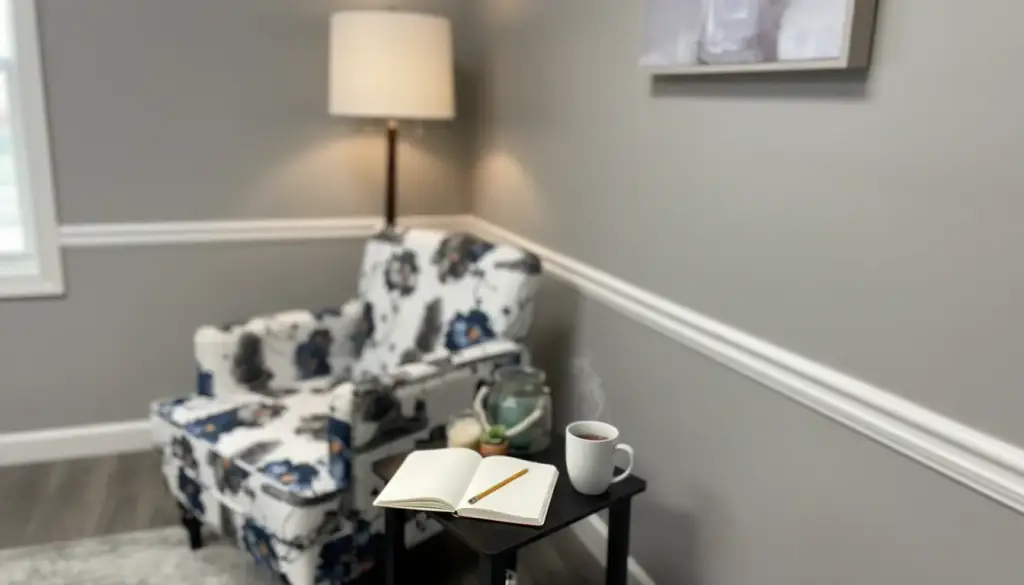
What anxiety looks like when it walks into the room
Anxiety rarely shows up as one tidy thing. For some people it is generalized worry that follows every decision, from breakfast to the replay at two in the morning. For others it is social anxiety, panic that arrives without warning, a phobia that quietly shrinks the week, obsessions and compulsions, or the aftereffects of PTSD. Our clinicians in Roswell see all of these, and the first job is simply naming which one you are living with.
Here is a small, common example. You rehearse a phone call six times, script both sides of it, and still hang up feeling worse. We wrote a whole post about that habit, The Script in Your Head: Why Anxiety Makes You Rehearse Phone Calls. If that sounds like your Tuesday, this is the right page. You do not need a diagnosis to call (770) 800-7362 and talk it through with someone who has heard it before.
CBT, DBT, IFS and mindfulness, matched to the worry
The work starts by exploring the thoughts and patterns behind the worry. With CBT you learn to catch a thought, write it down, and test it against what actually happened, which is the thought record. DBT adds skills for the moments when emotion runs ahead of reason, such as breathing, grounding and getting through a hard hour without acting on it. Mindfulness practice ties both together by teaching you to notice the spike before it takes over the afternoon.
Internal Family Systems, or IFS, treats the anxious voice as a part of you with a job, usually protection, rather than an enemy to silence. Tara Towler-Cumby, our owner, practices CBT and IFS, and John McCord draws on person-centered therapy, CBT and IFS. When you call, Lily and Tara listen to what you are dealing with and match you to the clinician whose approach fits it.
What happens between sessions, and how to begin
We call ourselves the homework therapists because real change happens between sessions. You leave with something small to practice that week: a thought record, a breathing skill, one phone call made without the script. The next session starts from what happened when you tried it, so the time in the room goes to adjusting the tools instead of starting over. The aim is practical ground under your feet, a calmer baseline you can feel on an ordinary day.
Sessions run 45 to 60 minutes, usually weekly or every other week. Meet us in person at 425 East Crossville Road near downtown Roswell, or by secure video from anywhere in Georgia. Next-day appointments are often available, and the first step is a free 15-minute consultation. We are out of network with most plans and provide superbills, a sliding scale is available for qualifying clients, and some therapists accept BCBS.